We specify laminated by the problem
A London glass processor cutting and supplying laminated glass from Wembley.
A laminated glass specialist, not a general glass shop
London Laminated Glass exists because laminated work gets sold badly. It is specified by adjective rather than by make-up, acoustic glass is sold to people with a ventilation problem, security is quoted as toughened by firms who should know better, and nobody mentions the weight until the van arrives. We do one family of products properly: laminated glass for noise, for security, for overhead retention and for barriers. Everything else we are asked for, we either make in the same workshop or tell you to buy elsewhere.
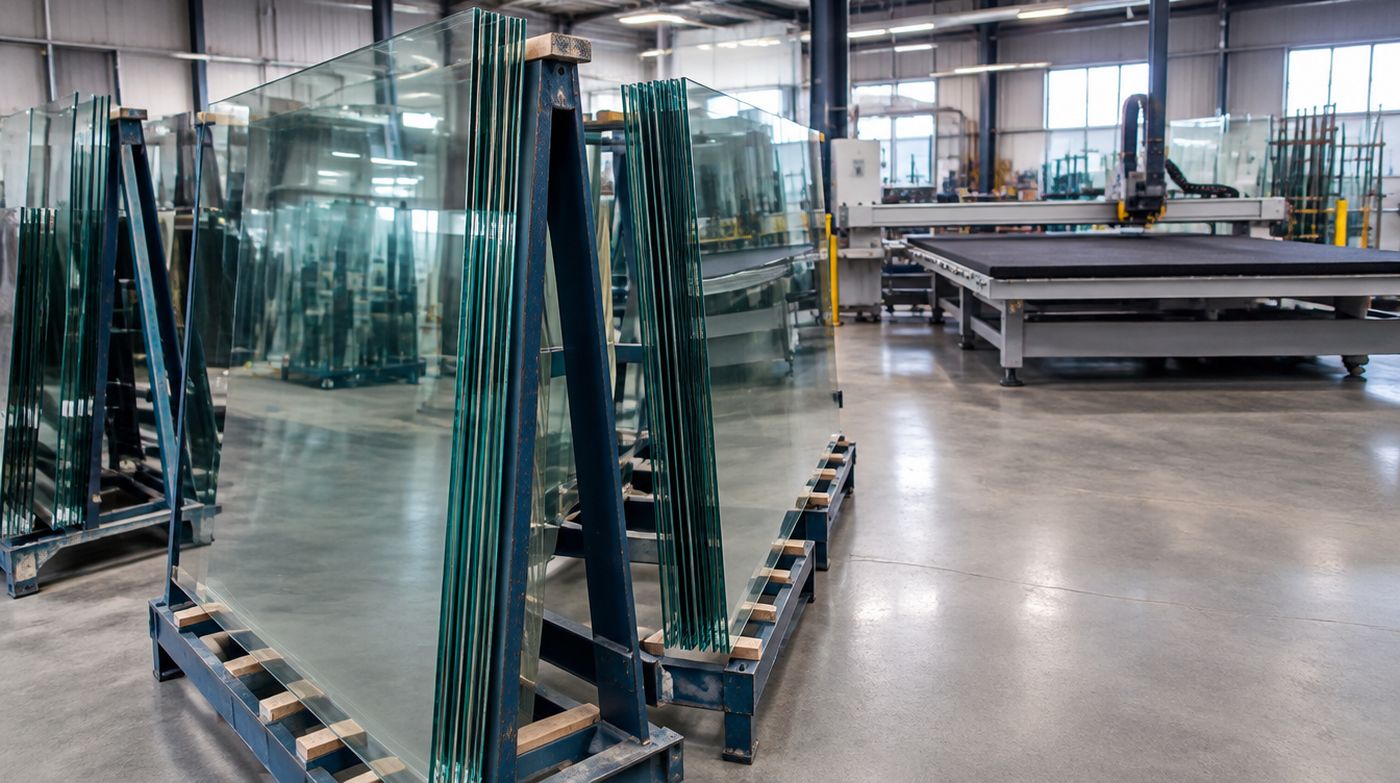
We are part of a London glazing company with its own glass processing workshop at 6 Atlas Road in Wembley. We cut, edge, polish, toughen and laminate, and we make up sealed units. That matters more for laminated work than for anything else we do, because laminated glass can be cut and reworked after manufacture while toughened cannot. A site remeasure after an opening is stripped out, an out-of-square Georgian head that needs a template, a pane that arrives 4mm too wide for a frame that has moved: all of those are solvable the same week when the saw and the laminating line are ours.
How we actually work
Every job starts with a free site survey anywhere in Greater London. We are strongest in north, west and central London and we go south and east regularly. A surveyor measures the opening, checks the frame and the structure around it, and works out what the glass has to do. For acoustic work that means checking the other sound paths before committing to a specification. For security work it means asking what the risk actually is and whether the frame and the fixings can carry a heavier pane. For overhead and barrier work it means establishing the loads and the span before a thickness is proposed.
You then get a written fixed quotation against a stated specification. Not a range, not a day rate, not a figure that moves once the glass is off the van. If something is unknown at survey, such as what is behind a plastered reveal, we say so in the quote and tell you what the two outcomes would cost rather than hiding a variation in the small print.
Manufacture happens in Wembley. Installation is carried out by our own installation teams. We do not subcontract to whoever is free that week, which matters on laminated jobs because handling heavy panes safely is a skill and a two-man crew who have never lifted a 60kg pane up a Victorian staircase will damage your plaster, the glass or themselves. The same crews fit laminated glass week in and week out, so they arrive with the right suction equipment, the right number of people and a plan for getting the pane into the room.
We are a FENSA registered installer, so where the work involves replacement windows and doors in a dwelling, it is notified and you receive a FENSA certificate. Our hours are Monday to Friday, 8am to 5pm, and the number is 020 4634 6045. A real person who has been on site answers it.
Things we will not do
This is the part most companies leave off their about page. We would rather lose the enquiry than take it on dishonest terms.
We will not quote acoustic glass over the phone. If you describe traffic noise and ask for a price for acoustic laminated glass to the nearest hundred pounds, we will offer a survey instead, every time. We will not write a decibel improvement for your room into a quotation, because the figure on a data sheet belongs to a test laboratory and transferring it to your bedroom would be a lie with a number in it. We will not sell an acoustic upgrade when the survey shows the dominant noise path is a trickle vent, a letter plate, an extract duct or a hollow sash box, and we will not sell one at all for footfall from the flat above, which travels through the structure and not through your window.
We will not supply toughened glass as a security product. If a quote you have had describes toughened glass as security glass, ask the firm which BS EN 356 class it was tested to and watch what happens. We will not certify or guarantee somebody else’s balustrade installation, and we will not supply barrier glass without knowing the loading it is being designed for and who is responsible for that calculation. We will not fit new laminated units into frames that are rotten, racked or no longer holding square, because the pane will fail at the edges and you will blame the glass. And we will not put laminated glass in a shower enclosure, where toughened is the correct product.
We also turn work away on grounds of value. Internal door panels and screens that only need to be Class A safety glass are cheaper in toughened. Shelves, splashbacks and table tops are toughened jobs. And in a conservation area with sound original sashes, acoustic secondary glazing on a deep air gap will usually beat anything we can get into the existing frame, which is a smaller sale for us and a better result for you.
We would rather talk somebody out of the wrong glass than fit it and have them tell their neighbours it made no difference. In this trade the reputation cost of an oversold acoustic job lasts longer than the margin on it.
Standards, testing and the paperwork you keep
Expertise in glass is demonstrated with documents, not adjectives. Depending on what you buy, the paperwork that leaves with the job includes some or all of the following. A declaration of performance for laminated glass manufactured to BS EN 14449, identifying the glass make-up and the interlayer. The safety glass marking on the pane itself, satisfying BS 6206 Class A or the equivalent BS EN 12600 classification, which is what a building control officer looks for in the critical locations defined in Approved Document K. A stated BS EN 356 class for security laminated glass, with the test category it was achieved under, so your insurer or a specifier can check it against a required standard rather than take a sales claim on trust. Barrier loading established against BS 6180, with the design assumptions written down. Where new windows or doors are involved in a dwelling, a FENSA certificate.
Two areas are worth a word of context rather than a claim. On security, insurance wordings and police-preferred specifications generally work by referring out to recognised standards, so the useful question is always which class and tested how, not whether a product is described as approved. We will tell you what class we are supplying and leave you to check it against whatever your policy or your specifier asks for. On new conversions and some change-of-use work, Approved Document Q sets security requirements for windows and doors in new dwellings, and an officer will want evidence against a standard rather than a brochure. In both cases our job is to supply something testable and hand you the evidence.
What we are honest about on guarantees
Laminated glass does not usually fail in the middle. It fails at the edge, where moisture gets into the bond line and works inwards as a cloudy haze. That is delamination, and in the great majority of cases it is caused by water sitting against an edge rather than by a manufacturing fault: a blocked drainage slot, a putty rebate holding water, an incompatible sealant attacking the interlayer, a bottom-fixed balustrade shoe that never drains.
So we detail against it. Drained and ventilated rebates, correct setting blocks so the glass never touches metal or masonry, adequate edge cover, and sealants that are compatible with the interlayer. Where we install, we stand behind our detailing. Where we are supplying laminated glass panels cut to size for somebody else to fit, we will tell you what the edge needs and then the drainage is honestly out of our hands, and we say that before you order rather than after you complain. A warranty that pretends to cover an edge sitting in standing water in a position we never saw is not worth the paper.
If you want to test whether we know what we are talking about, ask us at the survey why your two panes should be different thicknesses, what the coincidence dip is, or what BS EN 356 actually does to a sheet of glass to award it a class. Anybody selling laminated glass in London should be able to answer all three without reaching for a brochure.
Tell us what the glass has to solve
Noise, security, an overhead opening or a barrier. Describe the problem and we will specify the build-up and quote it in writing.