Security laminated glass: the grades and where they are worth it
Security laminated glass does not stop an attack. It turns a three-second entry into a noisy two or three minutes, and the grade you need depends entirely on which of those minutes you are buying.
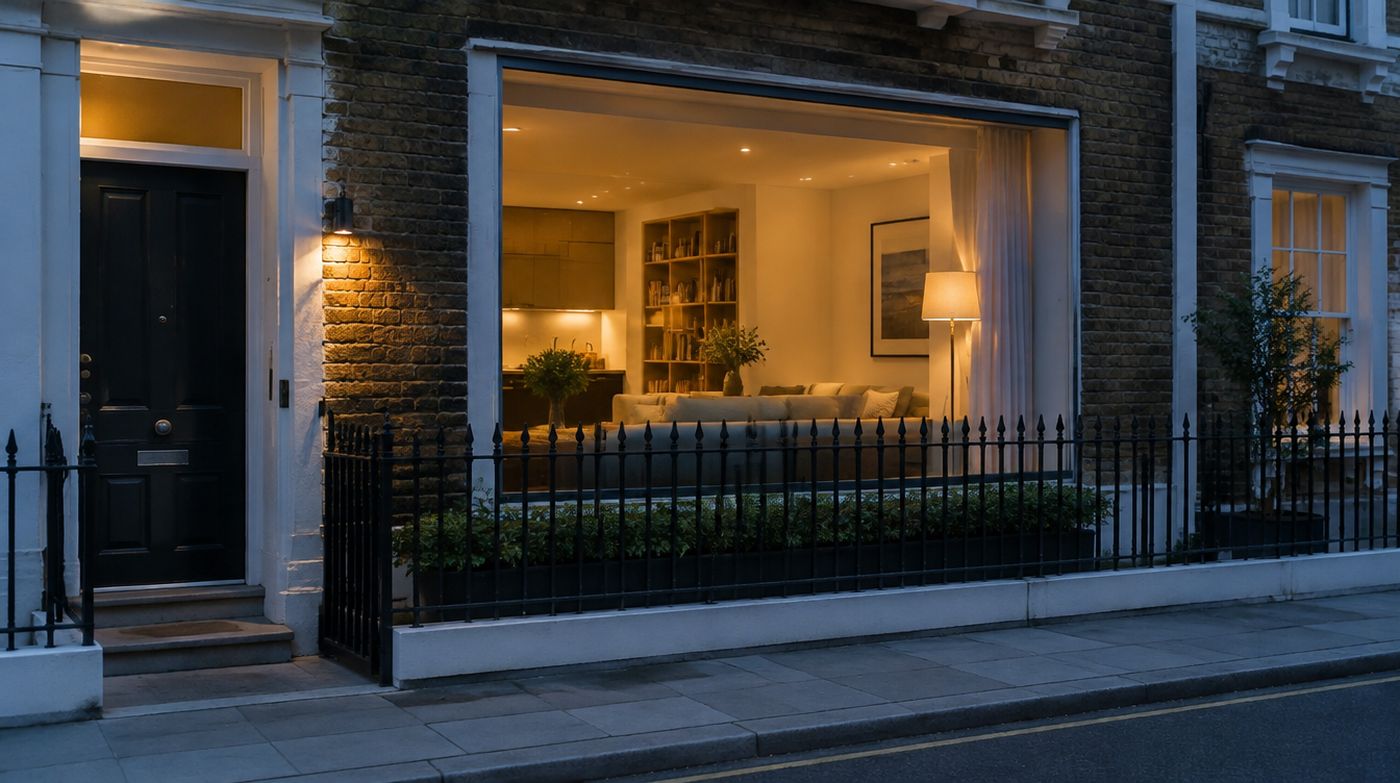
What security laminated glass does under attack
Ordinary annealed glass gives way at the first serious hit. Toughened glass gives way completely, which is worse for security than people assume: one well placed blow and the entire pane is granules on the floor with a clear opening above them. Security laminated glass is built to crack and then stay exactly where it is.
A thick multi-ply interlayer absorbs the energy of repeated blows. The glass on both faces breaks, but the plastic holds the fragments and keeps the sheet spanning the opening. Somebody with a hammer then has to cut or tear that plastic out of the frame, which takes time, both hands, a cutting tool and a great deal of noise on a street where noise is the one thing a burglar will not tolerate.
That is the whole mechanism, and it sets the limits honestly. For almost every London property the useful question is not whether the glass can be defeated, because given long enough it can. It is whether the delay and the noise are enough to make somebody go elsewhere.
The grades: BS EN 356 in plain terms
Security glazing is graded by test rather than by description. BS EN 356 sets out two families. The P1A to P5A classes are tested by dropping a steel ball of about 4 kilograms onto the pane in a triangle pattern, from heights rising from roughly one and a half metres up to nine, with the higher classes taking repeated drops. The pane passes if the ball does not pass through. The P6B to P8B classes are tested by a machine swinging an axe and a hammer at the same point, and the class depends on how many blows the pane takes before an opening appears.
So the A classes measure resistance to a thrown or dropped object: a brick, a scaffold clip, a slipped roof tile, a bottle. The B classes measure resistance to somebody deliberately chopping their way in. They answer two different questions, and there is no sense buying the second when the first is the actual risk.
In practice, P1A is the common anti-vandal specification and is the sort of glass expected in accessible positions in new housing. P2A and P4A step up through thicker and multiple interlayers. P5A resists sustained ball drops. P6B and above means several thick interlayers, build-ups well past 11.5mm, weights the frame has to be designed around, and prices that mean you should be sure of the threat before you commit.
Anything sold as security glass without one of those codes is a description rather than a specification. Ask which class, tested to which standard, and get both on the quotation next to the build-up.
The frame and the fixing decide the result
This is the point at which most security glass is sold badly. A P4A pane held in a shallow rebate by a clip-on bead, with no setting blocks and barely any edge cover, does not give you P4A security. An intruder simply levers the whole sheet out of the frame, and it comes out easily precisely because the laminate kept it in one piece.
Security glazing needs deep edge cover, beads fixed mechanically from the inside wherever the design allows, a frame section stiff enough that it will not flex away from the glass, and locks and hinges to match. On old timber sashes that often means the frame and the glass have to be addressed together, or there is no point addressing either.
If the budget will cover the glass or the frame but not both, spend it on the frame, the beading and the locks first. A standard laminated pane in a strong, properly beaded, well locked frame beats a graded pane in a weak one, and we will quote it that way round even though the glass is the part we make.
Approved Document Q, PAS 24 and new homes
New dwellings in England have to satisfy Approved Document Q for security. In practice that means windows and doors tested to an enhanced security standard, normally PAS 24, and glazing in easily accessible locations specified as laminated meeting the lowest of the ball drop classes as a minimum. Easily accessible means what you would expect: ground floor and basement, plus anything reachable from a flat roof, balcony, bin store, boundary wall or a drainpipe somebody could climb.
Two practical consequences. In a new build, or a conversion creating new dwellings, this is not optional, building control will look for evidence, and the certificates are worth keeping in the handover file. In an existing house there is no such requirement, which means the decision is entirely yours and should be made on the real risk at each opening rather than on a regulation that does not apply to your building.
Insurance, Secured by Design and specifying by rating
Insurers and specifiers work from standards, and it helps to know which standard covers what. BS EN 356 grades the glass. BS EN 1627 to 1630 grade a complete window or door assembly as resistance classes, RC1 upwards, because the assembly is what actually gets attacked. LPS 1175 grades security products by tested security rating and appears in commercial, retail and public sector specifications. Secured by Design is the police-backed scheme that points at those standards for new buildings.
If an insurer has asked you to upgrade glazing, after a claim or as a condition of cover, get the requirement in writing and quote the class back to them before buying anything. People regularly fit far more glass than the policy asked for, and occasionally far less than it required, because the requirement was taken down over the phone and nobody wrote the class on the order.
Grilles, shutters or security laminated glass?
Bars and shutters stop entry outright, and per opening they are cheaper than a graded pane. Glass keeps the light, the view and the appearance of the building, and it is never left open by accident. Which is right depends on the opening, not on a principle.
For a rear kitchen window in a side return that nobody overlooks, an internal grille or a decent shutter is honest value and we will say so even though we sell glass. For a front bay in a conservation area, a shopfront that has to look open, or a flat where a grille becomes a fire escape problem, laminated is the only sensible route.
The combination that wastes money is a graded pane with a cheap handle and no window lock. Nobody fights glass when the same opening offers an easier way through, and a decent burglar reads a building faster than most surveyors.
Which London openings are worth upgrading
Walk the outside of the building and be honest about what is reachable from the ground or from something a person can stand on. Rear ground floor windows screened by a fence or a side return. Basement and lower ground windows into a lightwell, which is the single most common weak point in a converted Victorian terrace. Anything beside a flat roof, a garage roof or an outrigger. First floor windows above a porch. Patio doors onto a garden with rear or side access from an alley.
Then leave the rest alone. A second floor window on a sheer elevation does not need security laminated glass, and nor does a front window in full view of a lit, busy pavement. Upgrading everything is how people spend four figures and improve nothing measurable. Three openings done properly, glass and frame together, beats twelve done decoratively.
Security glazing buys you time and noise, and that is all it buys. If nobody is going to hear and nothing is going to happen in the three minutes you have bought, the money belongs in lighting, an alarm or a better lock instead of in thicker glass.
What we specify and what we will not claim
We make and fit laminated glass to stated classes, we put the class and the standard on the quotation, and we hand over the documentation for the glass we supply. What we will not do is describe a pane as anti-bandit, attack resistant or anything similar without a tested class behind the words, because those terms mean nothing and insurers know it.
Nor will we quote bullet resistance. That is a separate standard, a separate product with far heavier build-ups, and a market that has nothing to do with London domestic glazing. If somebody genuinely needs it, they need a specialist and a specification written by their security consultant, not a glazier’s opinion.
FAQ
Questions about security laminated glass
Does security laminated glass stop a brick?
A laminated pane meeting the lower ball drop classes of BS EN 356 is tested with a steel ball of around 4 kilograms dropped repeatedly onto the same area, which is a reasonable proxy for a thrown brick. The glass will crack, sometimes badly, but the interlayer holds the fragments and the opening stays closed. You will be replacing the pane, not boarding up a hole. Higher classes resist heavier and more sustained impact. What no class of glass does is survive invisibly, so expect to pay for a new pane after a serious hit.
Is security laminated glass bullet proof?
No. Bullet resistance is a different standard, a different product and a very different build-up, typically far thicker, much heavier and requiring a frame designed for the load. BS EN 356, which grades security laminated glass, tests resistance to dropped objects and to manual attack with an axe and hammer. Nothing in it addresses firearms. If a supplier offers you bullet resistance alongside ordinary domestic glazing without naming the relevant standard and class, be sceptical. For domestic and most commercial work in London the useful question is how long the glass delays entry, not whether it stops a round.
What grade of security glass do I need?
Start from the threat rather than the catalogue. For vandalism, thrown objects and opportunistic entry, the lower ball drop classes of BS EN 356 are the normal answer and are what new housing uses in accessible positions. For premises that have already been attacked with tools, or that hold something worth a sustained effort, the axe-tested classes are the relevant family. If an insurer is driving the decision, get the requirement in writing and quote the class back before ordering. And check the frame and locks at the same time, because the assembly sets the real performance.
Tell us what the glass has to solve
Noise, security, an overhead opening or a barrier. Describe the problem and we will specify the build-up and quote it in writing.